Great lighting is no longer reserved for large film crews, permanent studios, or creators with time to assemble a maze of cables and modifiers. Today’s content workflow can move from a desk to a bedroom set, from a product table to a location shoot, and from a livestream to a short film in the same week. That is exactly where Amaran stands out. The brand’s lineup is built around a simple idea: give creators professional-looking control without forcing every setup to feel complicated.
Browse Amaran’s Amazon storefront and the range quickly makes sense. Compact COB lights, high-output full-color fixtures, desktop panels, tubes, mini lights, modifiers, stands, and accessories are organized around different ways people actually create. The goal is not one perfect light. It is a lighting system that can scale from one-person content production to a more ambitious studio workflow.
The six products below show that philosophy especially well. Most are unmistakably Amaran products, while two of the supplied references—the Aputure MT Pro and MC Pro—are Aputure-branded tools that complement an Amaran-focused lighting setup with highly portable accent-lighting options.
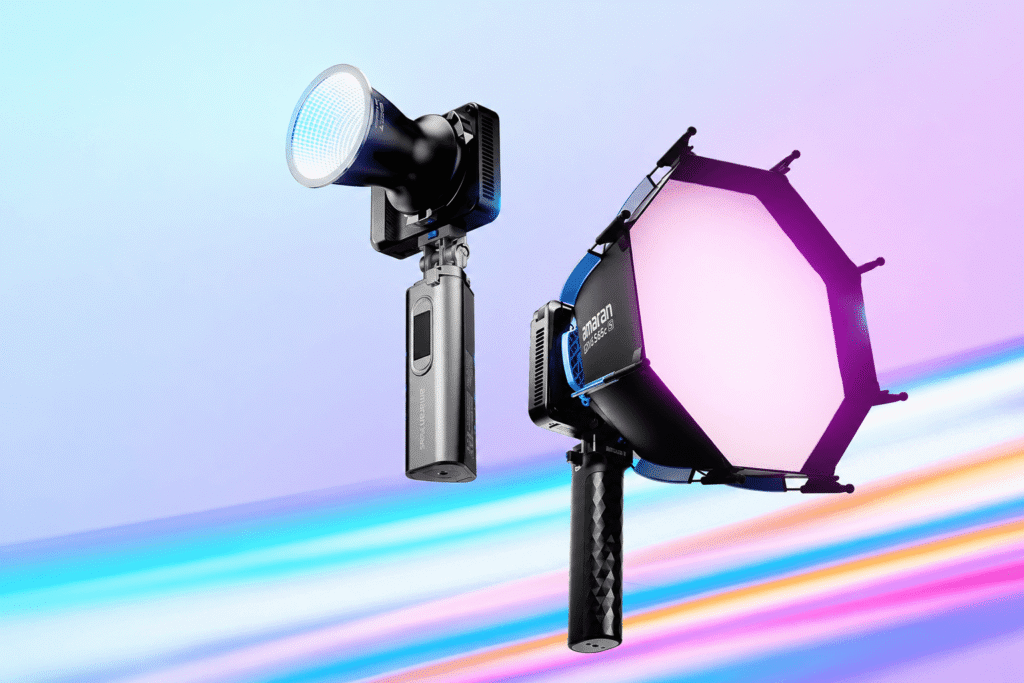
1. Amaran Ray 120c: Big Color Without the Big Fixture
The Ray 120c is the kind of light that makes you question how much equipment a small studio really needs. It is a 120W full-color Bowens Mount COB fixture powered by Amaran’s OmniColor light engine, yet it is designed around portability rather than bulk. Amaran lists the body at 5.1 cm thick and 599 g, with output reaching up to 6,850 lux at one meter bare. Its color-temperature range extends from 1,800K to 20,000K, giving creators room to move from warm practical-light looks to cool daylight styles and highly stylized color work.
That combination matters for solo creators. A compact point-source light can become a key light with a softbox, a harder directional source with a reflector, a background color source, or a travel-friendly option for location work. The Ray 120c is especially appealing for YouTubers, photographers, product creators, interview shooters, and small commercial teams who want full-color flexibility without dedicating half a room to lighting gear.
2. Aputure MT Pro: A One-Foot Light That Can Completely Change the Frame
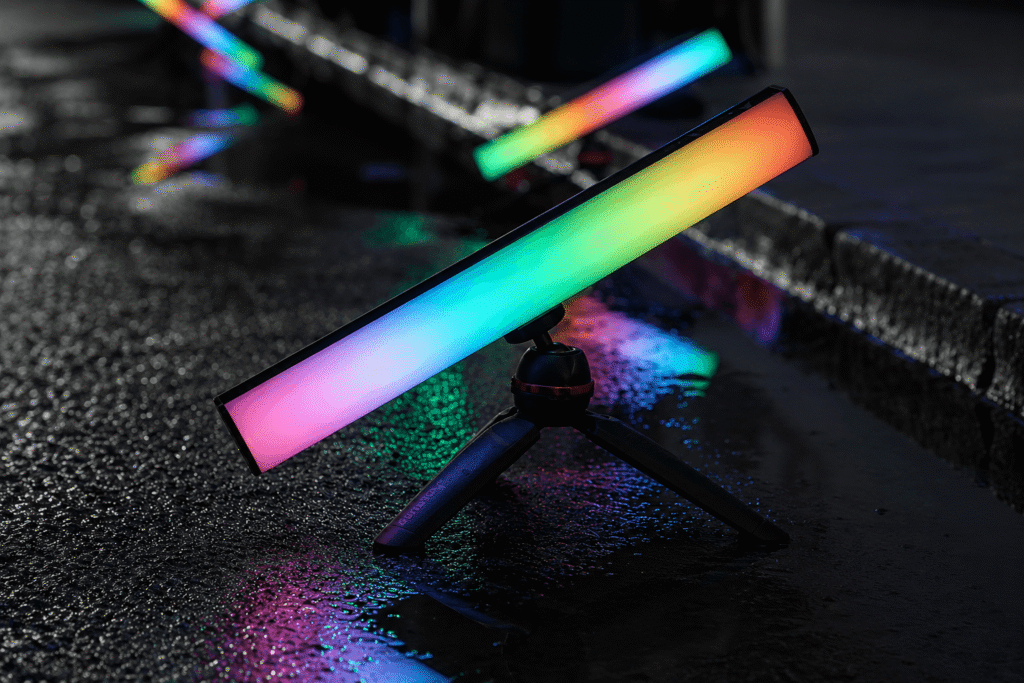
The MT Pro takes the opposite approach. Instead of being the main source that illuminates a subject, it excels at becoming part of the composition. This one-foot full-color mini LED tube uses 36 RGBWW pixels, allowing smooth pixel effects, color transitions, and animated lighting looks. Aputure also equips it with a 2,000K–10,000K CCT range, advanced color controls, built-in effects, and wireless CRMX connectivity.
For practical filmmaking, the MT Pro can hide behind furniture, sit inside a shelf, run along the edge of a product table, appear as a visible neon-style practical, or add color separation behind a subject. For social content, it can make a plain background feel intentional. Rather than rebuilding a location, a creator can place one narrow line of controlled color in the frame and create visual depth.
3. Amaran Ray 360c: When the Home Studio Needs to Behave Like a Real Studio
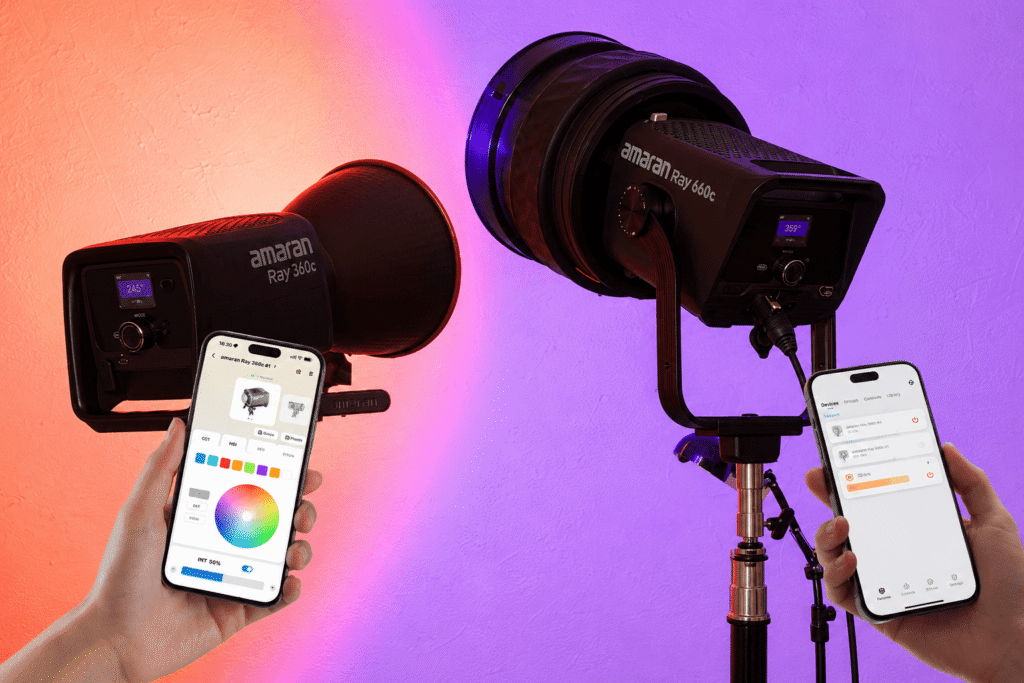
If the Ray 120c is built for creators who move, the Ray 360c feels built for creators ready to push a compact studio harder. It is a 360W full-color Bowens Mount COB light using the OmniColor light engine, but with significantly more output. Amaran rates it at up to 17,130 lux at one meter bare and describes the fixture as an all-in-one monolight-style design powered by a single AC cable.
The appeal is not simply brightness. More output gives creators options. You can push light through diffusion, place the fixture farther from the subject, use larger modifiers, compete with brighter ambient conditions, or shape the beam more aggressively without immediately running out of intensity. That makes the Ray 360c relevant for talking-head production, fashion shoots, music videos, branded content, interviews, and small narrative sets.
For creators building a studio around one serious full-color key light, the Ray 360c can become the center of the setup while smaller lights handle background accents and practicals.
4. Amaran Halo 200x: A Practical Bi-Color Workhorse for Everyday Shooting
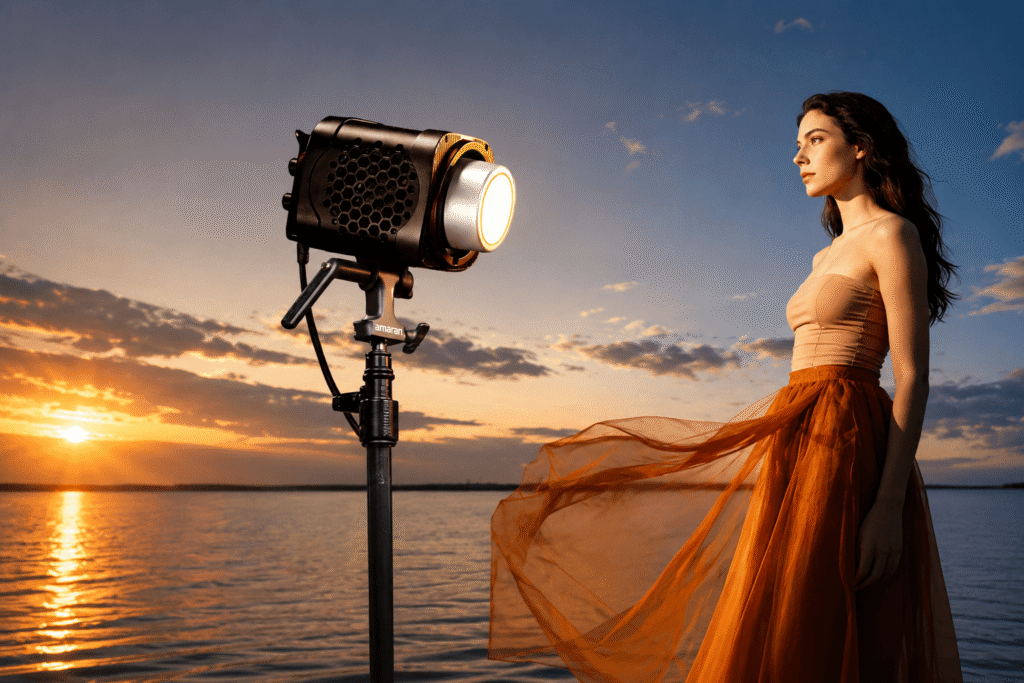
Not every project needs RGB. A large percentage of creator work becomes easier when the main light is simply fast, bright, accurate, and easy to adjust. The Amaran Halo 200x is aimed at that reality. It is a compact 200W-class bi-color Bowens Mount COB light with a 2,700K–6,500K range. Amaran highlights an integrated all-in-one design with the power supply built into the fixture, so the setup uses a single AC cable rather than a separate external power brick.
That may sound like a small convenience, but on repeated shoots it becomes a real workflow advantage. Fewer boxes and cables make a home studio cleaner and simplify moving the light between rooms or sets. Separate brightness and color-temperature knobs also keep basic adjustments immediate.
This is the kind of fixture that can become the “default light” in a creator’s kit. Pair it with a softbox for interviews, use it through diffusion for beauty work, bounce it for a broad room fill, or aim it through a doorway to create a natural motivated-light effect.
5. Amaran Verge Max: The Desktop Light That Treats Comfort as Part of Image Quality
Many creators spend hours in front of the same camera: livestreamers, educators, podcasters, remote professionals, reviewers, gamers, and tutorial makers. For them, lighting is not a ten-minute setup—it is part of the workspace. That is where the Verge Max takes a different position from a traditional COB fixture.
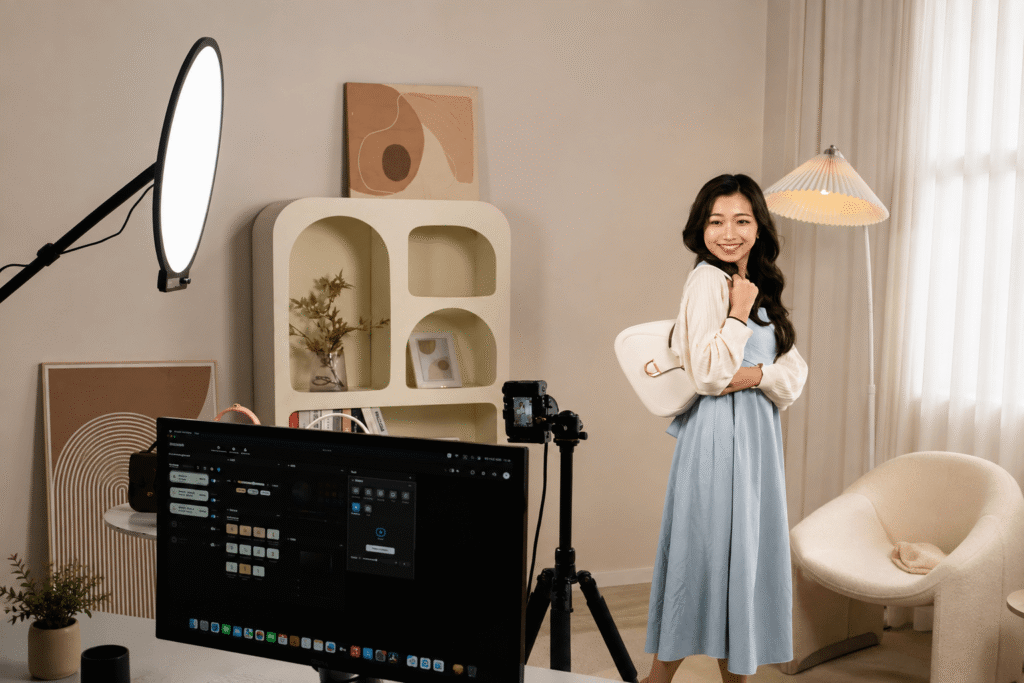
The Verge Max is a 22-inch bi-color circular edge-lit panel designed for desktop and compact-space creation. Amaran emphasizes its shallow profile, soft diffused output, and RG0-certified eye-safety design. The brand also offers desk-clamp mounting with a swing arm and pan-and-tilt adjustment, helping the light occupy less floor space than a conventional stand-and-softbox combination.
A large, soft source placed close to the face can produce flattering, even illumination for webcam and camera work. Practically, the bigger advantage may be that the light can live at the desk. There is no need to rebuild the setup every time you record. For creators who value consistency and a clean room, the Verge Max turns lighting from “gear you set up” into part of the furniture.
6. Aputure MC Pro: Pocket-Sized Lighting for the Problems Bigger Fixtures Cannot Solve
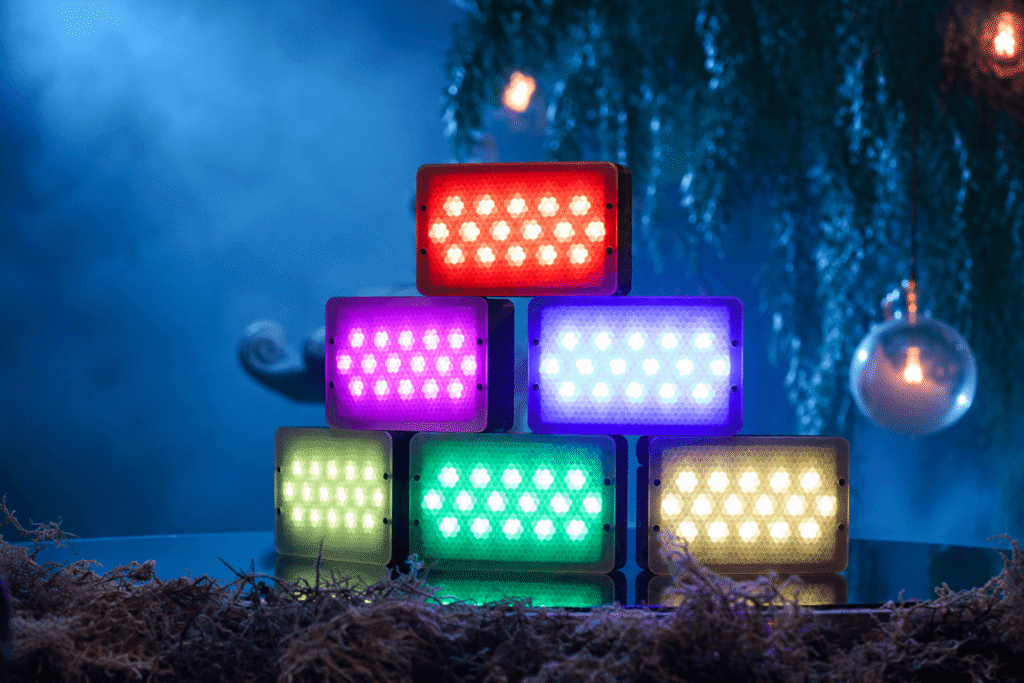
The MC Pro is the smallest tool in this group, but that is exactly why it can be so useful. Aputure describes it as a 5W RGBWW full-color portable mini LED panel with built-in battery power and CRMX control. It is also IP65 weather resistant and designed to mount in multiple ways, including with built-in magnets and accessory mounting options.
A light like this is rarely meant to replace a key light. Its strength is solving specific problems quickly. Need a glow inside a car? A highlight on a bottle? A color accent behind a plant? A practical under a shelf? A small source hidden in a corner of the frame? The MC Pro can go where a large fixture cannot.
It also makes a strong companion to Amaran’s larger lights. A Ray or Halo fixture can shape the subject, while an MC Pro adds the small splash of color or localized highlight that makes the frame feel layered.
What Makes the Amaran Approach Feel Different?
The most interesting thing about Amaran is not any single specification. It is the way the lineup acknowledges that “creator” now describes many different workflows. One person may need a portable full-color COB for travel. Another needs a powerful studio key. Another only wants flattering desk lighting for daily streaming. Someone else wants compact RGB accents to make a bedroom or product set feel cinematic.
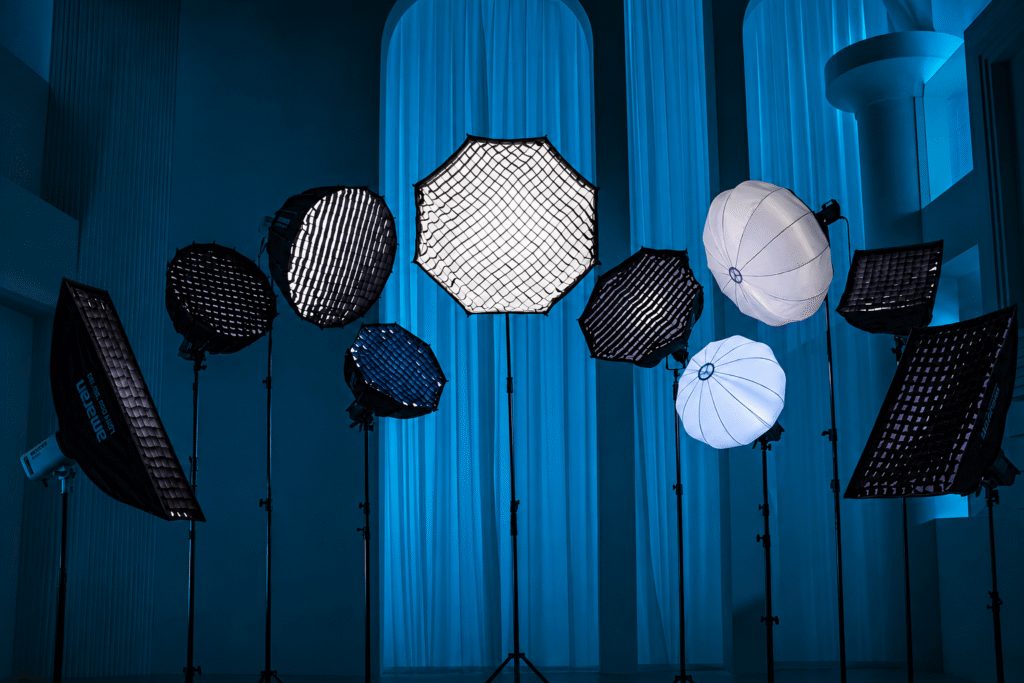
Amaran’s product families address those needs without forcing users into one form factor. The Ray family brings full-color COB lighting from compact to higher-output studio models. Halo focuses on accessible bi-color point-source lighting. Verge turns soft illumination into a desktop-oriented solution. Around those families sit modifiers, stands, mounting tools, panels, mats, and other accessories that let a setup evolve over time.
That scalability matters because most creators do not build a studio in one purchase. They start with a useful key light, then add a background source, a modifier, a desk solution, or a portable accent as their work expands. A good ecosystem lets each new piece solve a new problem instead of making old gear irrelevant.
Which Light Fits Which Creator?
For mobile creators and small-space shooters, the Ray 120c is a versatile starting point because it combines compact dimensions, full-color capability, and Bowens Mount compatibility. For creators who need more studio authority, the Ray 360c provides substantially more output for larger modifiers and more ambitious setups. For straightforward interviews, product work, tutorials, and consistent daily production, the Halo 200x keeps the workflow simple with bi-color control and an integrated power design.
Desk-based creators should look closely at the Verge Max, especially when comfort, permanent placement, and a clean workspace matter as much as raw output. The MT Pro and MC Pro are better understood as creative problem-solvers: they add color, depth, practical light, and visual interest in places where a conventional fixture would be awkward.
Final Verdict: Amaran Is Less About Buying a Light and More About Building a Workflow
The best creator tools disappear into the process. They reduce the number of decisions between an idea and a finished shot. That is the strongest theme running through Amaran’s lineup: compact fixtures, straightforward control, flexible mounting, full-color options where they matter, bi-color simplicity where they do not, and products designed for everything from desks to dedicated studios.
For a first-time lighting buyer, Amaran offers approachable entry points. For an experienced creator, the ecosystem offers enough range to build a more layered setup without immediately jumping into oversized cinema-production hardware. And for anyone producing content regularly, that balance between creative control and practical speed may be the brand’s biggest advantage.
Whether you are lighting a face, a product, a room, or an entire visual identity, Amaran makes a persuasive case that better lighting does not have to mean a more complicated setup.