For years, 3D printing enthusiasts and engineering professionals lived in two completely different worlds. On one end, hobbyists wrestled with open-frame desktop printers that required constant manual tweaking, struggled with ambient drafts, and stalled when tasked with printing anything tougher than standard PLA. On the other end stood high-end industrial machines—capable of printing aerospace-grade polycarbonates and carbon-fiber composites, but carrying prohibitive five-figure price tags that locked out independent creators and small workshops.
By bridging the gap between desktop accessibility and industrial-grade performance, QIDI has sparked a quiet revolution in modern additive manufacturing. With high-speed CoreXY architectures, active chamber heating, ultra-high-temperature hotends, and a fully integrated ecosystem of performance filaments and modular hardware, QIDI is democratizing advanced 3D printing. Whether you are building functional automotive prototypes, high-stress mechanical gears, complex multi-color designs, or crisp architectural models, QIDI provides the speed, precision, and material versatility needed to turn concepts into physical reality.
The New Benchmark in Additive Manufacturing
What makes QIDI stand out in a crowded market of 3D printing manufacturers? It comes down to a fundamental shift in design philosophy. While many manufacturers focus solely on raw speed—often at the expense of structural integrity and thermal management—QIDI engineers complete desktop manufacturing solutions built for endurance and material range.
A traditional entry-level printer works fine for decorative trinkets, but true functional engineering demands materials like ABS, ASA, Polycarbonate (PC), and Carbon-Fiber reinforced polymers. These advanced materials share a common nemesis: thermal contraction. Without precise control over the ambient printing environment, high-performance plastics warp, delaminate between layers, or detach from the print bed entirely.
QIDI addresses this engineering bottleneck at the source:
- Active Chamber Heating: Rather than relying on passive radiant heat from the print bed, QIDI integrates dedicated active chamber heating systems that keep ambient temperatures constant throughout long build jobs.
- High-Temperature Hotend Architecture: Pushing melt-zone limits up to 350°C, QIDI machines easily process ultra-tough engineering thermoplastics that clog standard 240°C or 300°C extruders.
- Rigid CoreXY Dynamics: Solid, heavy-duty frames combined with high-acceleration linear motion ensure rock-solid stability during high-speed directional changes.
- Closed-Loop Ecosystem Integrity: From specialized filaments to quick-swap bi-metal nozzles, every component works together seamlessly to minimize maintenance downtime.
The Max4: Bigger Ideas Need More Room
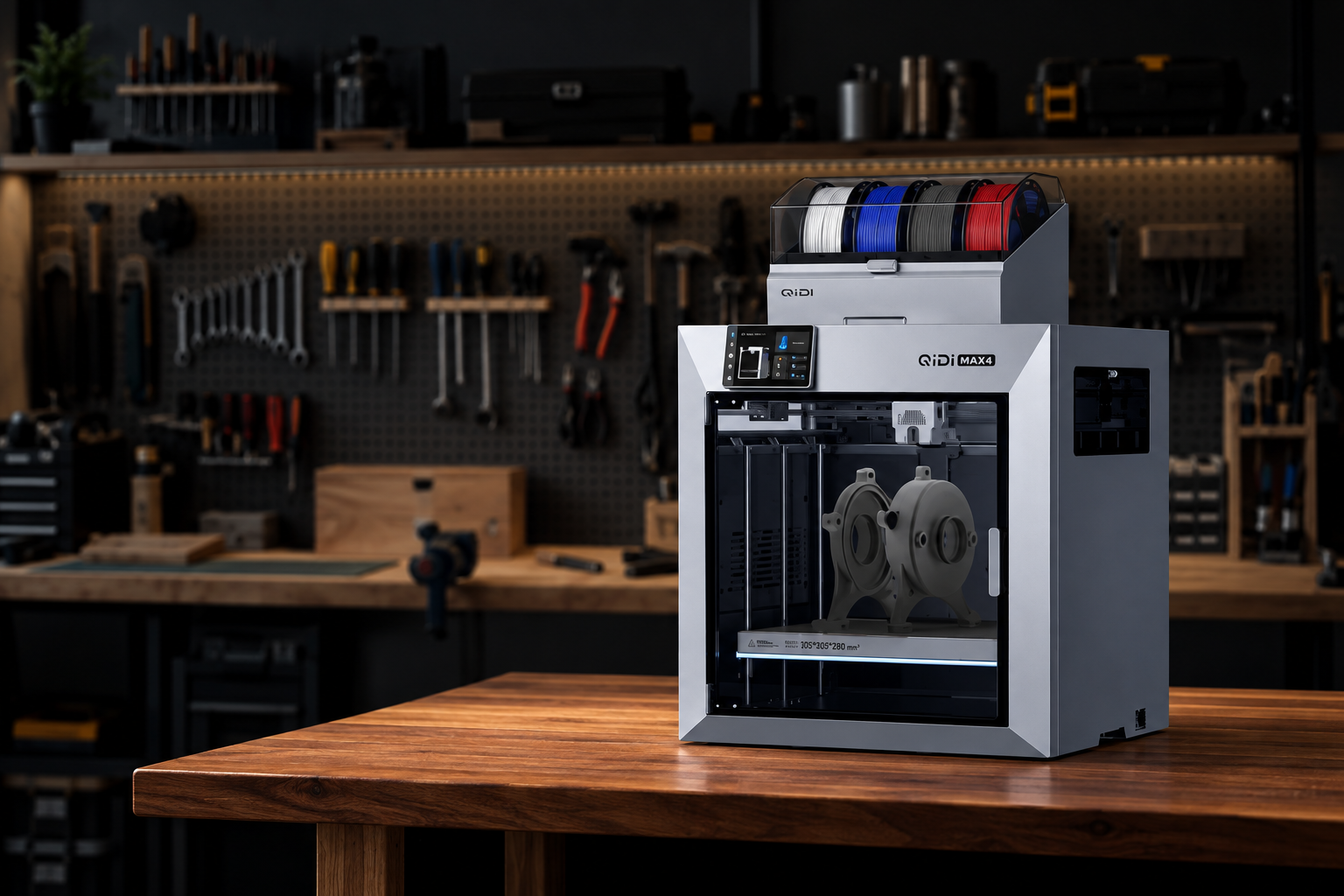
One of the strongest examples of QIDI’s current direction is the QIDI Max4 3D Printer.
Large-format printing can fundamentally change how a machine is used. Instead of dividing oversized models into multiple sections and assembling them afterward, creators can approach larger parts as more unified designs. According to the product presentation shown in the supplied materials, the Max4 emphasizes a substantial build area of approximately 390 × 390 × 340 mm.
That additional room can be useful for prototypes, functional components, cosplay pieces, architectural models, workshop tools, decorative projects, and other designs that become inconvenient on smaller platforms.
But size alone would not make the Max4 especially interesting.
Its presentation also emphasizes an enclosed structure, high-speed printing ambitions, intelligent monitoring features, and a filament system positioned around multi-material or multi-color workflows. An enclosed printer is particularly valuable for users experimenting beyond basic decorative PLA prints, because more advanced materials often benefit from a controlled printing environment.
This is where the Max4 represents R QIDI TECHNOLOGY particularly well. It combines accessibility with room for progression. A user could begin with straightforward models and later move into larger, more demanding engineering-style projects without immediately outgrowing the machine.
Small Components, Big Consequences: QIDI Bimetal Nozzles
A 3D printer may dominate the workspace visually, but some of its smallest components have an enormous influence on everyday performance.
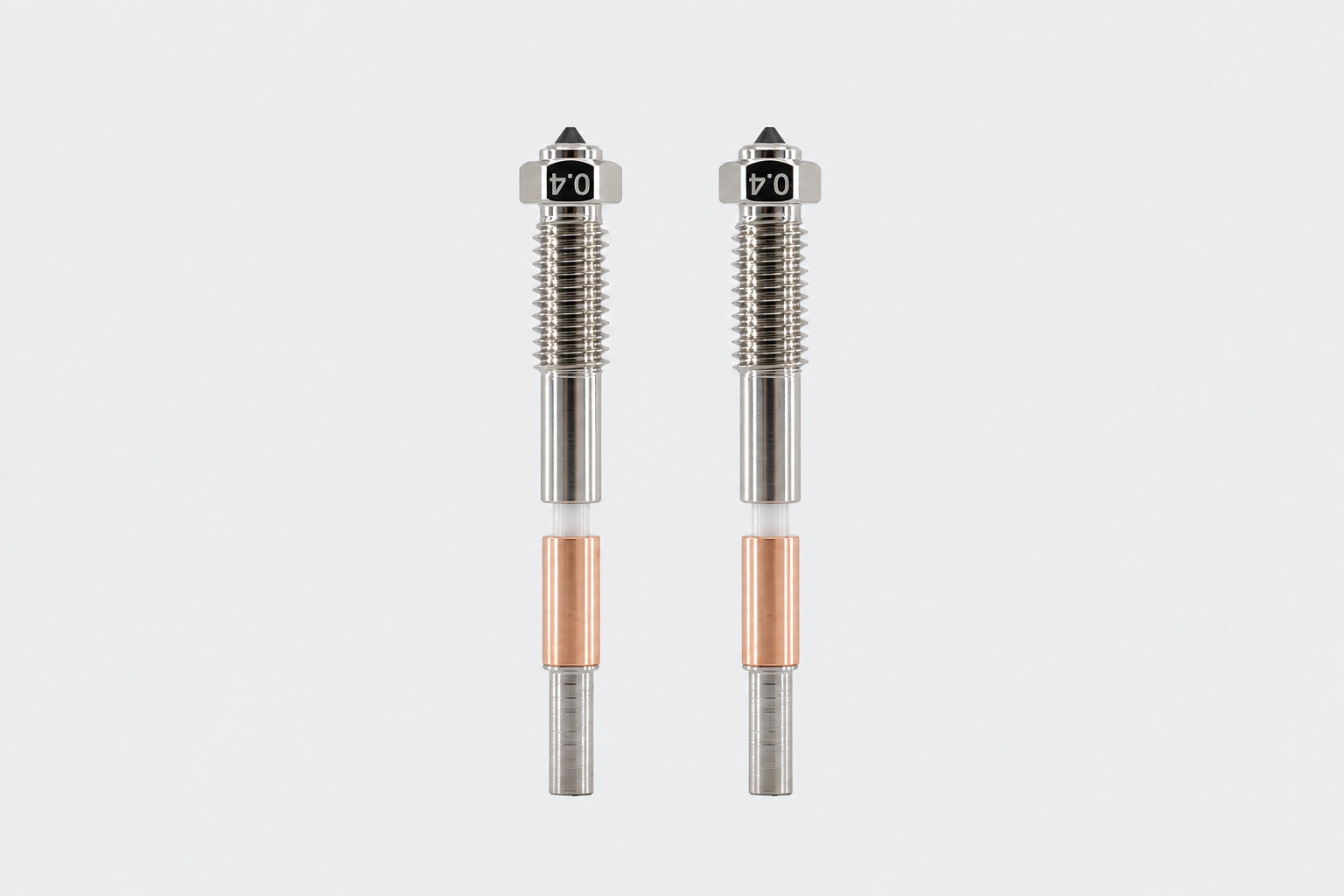
The QIDI bimetal nozzle set featured in the supplied product information is designed for selected QIDI Q2, Plus, and Q2C configurations. These components illustrate another important aspect of the brand’s strategy: QIDI does not treat replacement and performance parts as an afterthought.
The nozzle is where heated filament finally becomes the physical object being created. Consistent extrusion, heat transfer, dimensional accuracy, and wear resistance all depend partly on this tiny component.
A bimetal construction can provide a useful balance between thermal performance and durability, making this type of nozzle particularly relevant to users who frequently print or who want to explore materials beyond the simplest everyday filaments.
The availability of printer-specific parts also simplifies maintenance. Instead of searching through generic components and wondering whether dimensions or thermal characteristics are appropriate, users can select hardware developed around the intended machine family.
It is not the most glamorous part of 3D printing, but it is exactly the kind of supporting product that turns a printer brand into a broader ecosystem.
QIDI ASA Filament: Moving Beyond Decorative Printing
Printers become significantly more useful when users start thinking not only about what they can print, but also about what the finished object needs to withstand.
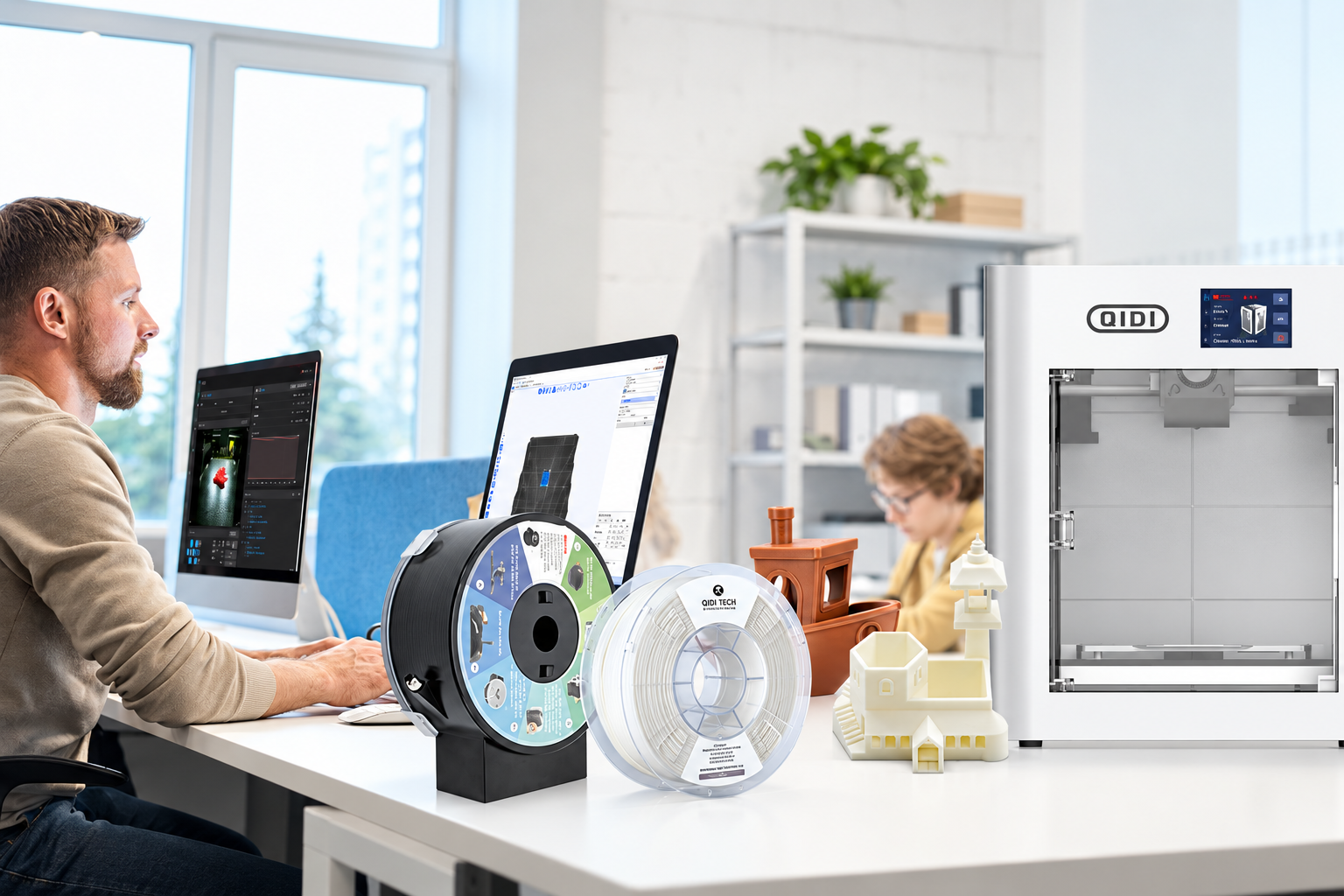
The QIDI ASA filament shown in the product materials is aimed at this more functional side of 3D printing.
ASA is commonly chosen for applications where durability, temperature resistance, environmental exposure, and dimensional reliability become more important than they would be for a simple display model. That makes it appealing for outdoor components, prototypes, fixtures, housings, workshop parts, and other functional creations.
R QIDI TECHNOLOGY’s filament presentation also highlights qualities such as controlled dimensional tolerance, reduced moisture exposure through protective packaging, and broad FDM printer compatibility.
These details reinforce an important part of the brand philosophy: hardware and materials should work together.
A capable enclosed printer becomes much more valuable when users also have access to filaments intended for more demanding conditions. Likewise, advanced filament becomes easier to explore when the printing platform is built around stable thermal management.
For users ready to move from colorful desktop objects toward engineering-oriented prints, ASA provides a logical next step.
High-Performance Hotend: The Hardware Behind Material Flexibility
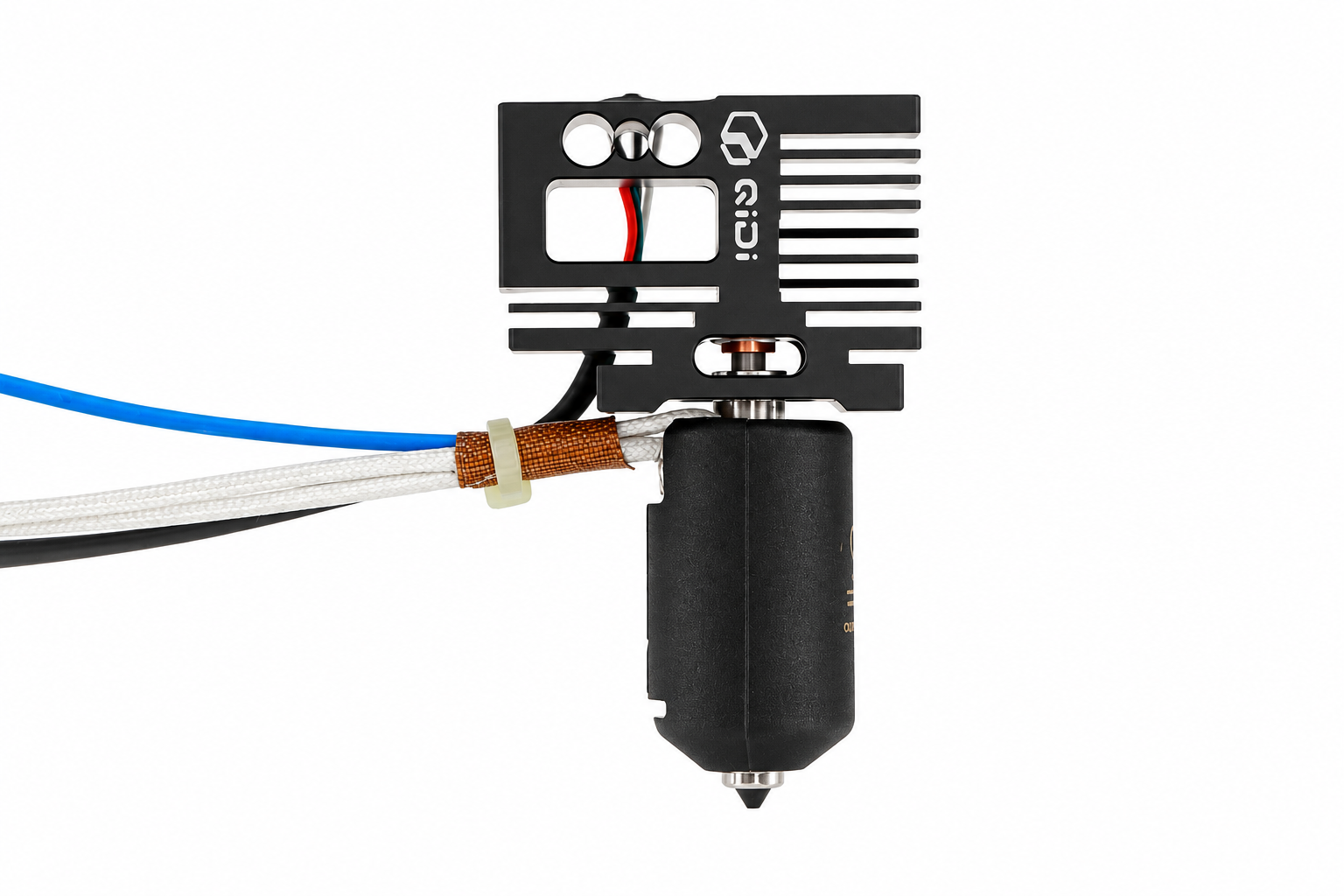
Another product in the QIDI ecosystem is the high-performance bimetal hotend with hardened steel nozzle.
This component is especially relevant because the hotend is effectively the thermal engine of filament extrusion. When users begin printing at higher temperatures or working with tougher and potentially abrasive materials, ordinary extrusion components may become a limitation.
The QIDI hotend shown in the supplied product materials is positioned around high-temperature capability, hardened nozzle construction, strong heat-transfer performance, and compatibility with multiple filament families.
That can be important for users experimenting with engineering materials or filled filaments that demand more from the extrusion system.
More importantly, it demonstrates how R QIDI TECHNOLOGY approaches upgradeability. Instead of considering the printer a sealed appliance that remains unchanged throughout its life, the ecosystem provides components that allow users to maintain performance and adapt the machine to evolving printing requirements.
For serious enthusiasts, this flexibility can extend the practical lifespan of the printer itself.
Real-World Applications: Who Is QIDI Built For?
- Engineering & Automotive Prototyping: Print functional jigs, fixtures, intake manifolds, and custom brackets using heat-resistant ABS or carbon-fiber composites that withstand real-world mechanical stress.
- Product Designers & Inventors: Iterate physically in hours rather than weeks. Print high-fidelity multi-color concepts directly for client presentations and user testing.
- Small-Batch Manufacturing: Deploy a fleet of QIDI printers to produce end-use parts, custom enclosures, and specialized tooling without incurring high injection-molding costs.
- Makers & Hobbyists: Enjoy plug-and-play setup, automated bed leveling, and intuitive touchscreen controls to produce crisp display models and functional household items effortlessly.
Final Thoughts: More Than a Printer on a Desk
R QIDI TECHNOLOGY stands out most clearly when viewed as an ecosystem rather than as a collection of individual listings.
The brand’s printers form the foundation, but the supporting products reveal the larger idea. Filaments, bimetal nozzles, high-performance hotends, multi-filament solutions, and replacement components all contribute to a platform designed around continued experimentation.
For consumers comparing 3D printing brands, that long-term perspective deserves attention. Buying a printer is only the first step. What ultimately determines its usefulness is how easily the system can support new materials, larger ambitions, routine maintenance, and increasingly complex designs.
R QIDI TECHNOLOGY appears to understand that progression.
Whether the goal is producing large-format models with the Max4, exploring more durable ASA filament, refreshing an extrusion system with purpose-built nozzles, or preparing a printer for more demanding materials with an upgraded hotend, the brand offers a connected route forward.
That may be the most important quality of the QIDI ecosystem: it does not simply give users another machine for making objects. It gives them room to keep developing what they can make.
Explore R QIDI TECHNOLOGY and discover more of its 3D printing ecosystem.