A Pet-Friendly Home Is Built Through Small Decisions
PetSafe pet products are designed around a practical question: how can a home accommodate an animal’s natural behavior without making everyday care unnecessarily complicated? A cat needs a comfortable place to eliminate, a dog needs appropriate boundaries and exercise, and both need dependable access to food, water, and human attention. Those needs rarely fit neatly into a single purchase. PetSafe’s appeal lies in viewing them as connected parts of daily life.
From a Boundary Solution to a Broader Pet-Care Identity
PetSafe began as a consumer brand in 1998, but its history reaches back to 1991, when founder Randy Boyd started a pet containment business in Knoxville, Tennessee. The parent organization adopted the name PetSafe Brands in 2024, reflecting how far it had expanded beyond its original fencing roots.
Today, PetSafe’s range includes automatic litter systems, drinking fountains, feeders, pet doors, walking accessories, interactive toys, and containment products. More notable is its willingness to work on decidedly unglamorous challenges: litter odor, spilled water, complicated access, messy feeding routines, and the small frustrations that can accumulate when humans and pets share a space.
That approach makes PetSafe different from a narrowly focused gadget label. A first-time cat owner may discover the brand through crystal litter; a dog owner may recognize its harnesses or wireless fencing systems. Across these categories, the central promise is similar: reduce routine friction without overlooking the animal using the product. Support guides and replacement supplies matter, too, especially when a device depends on proprietary trays, filters, or batteries.

Four Questions Behind More Thoughtful Pet Products
A useful way to understand PetSafe is to look past feature counts and ask what a product changes in practice. Our editorial framework evaluates pet-care equipment against four questions, rather than claiming that newer or more automated always means better:
- Comfort: Does the animal willingly use it, and can its needs, size, and sensitivities be accommodated?
- Convenience: Which repeated chore becomes easier, and what cleaning, refilling, or supervision remains necessary?
- Continuity: Are compatible refills, replacement parts, batteries, and instructions easy to identify?
- Confidence: Can the owner observe normal behavior and recognize when an apparent convenience is masking a problem?
These four considerations explain why a litter refill can matter as much as an electronic litter box. They also reveal the limits of convenience marketing. A quiet, accessible litter area is more valuable than any odor-control claim if a cat dislikes its substrate. Likewise, a dog boundary is only a responsible solution when it supports safety, rather than replacing training, supervision, or a secure environment.
Why Routine Care Is Becoming a Bigger Conversation
The American Pet Products Association reported that 95 million U.S. households owned a pet in 2025, with total industry spending reaching $158 billion. Its 2026 industry report also describes a shift toward more deliberate, value-focused purchases. Many families instead want a product that earns its space in the home by solving a recurring issue reliably.
For cats, consistency and location can matter more than accessories. Guidance from the Feline Veterinary Medical Association recommends adequate litter boxes in separate locations, typically one per cat plus an additional box, and recognizes that many cats prefer unscented, soft litter. This provides an important counterbalance to product descriptions. PetSafe’s fresh-scent crystal options may appeal to particular households, but the cat’s response—not the advertised fragrance or cleaning interval—should guide the final decision.
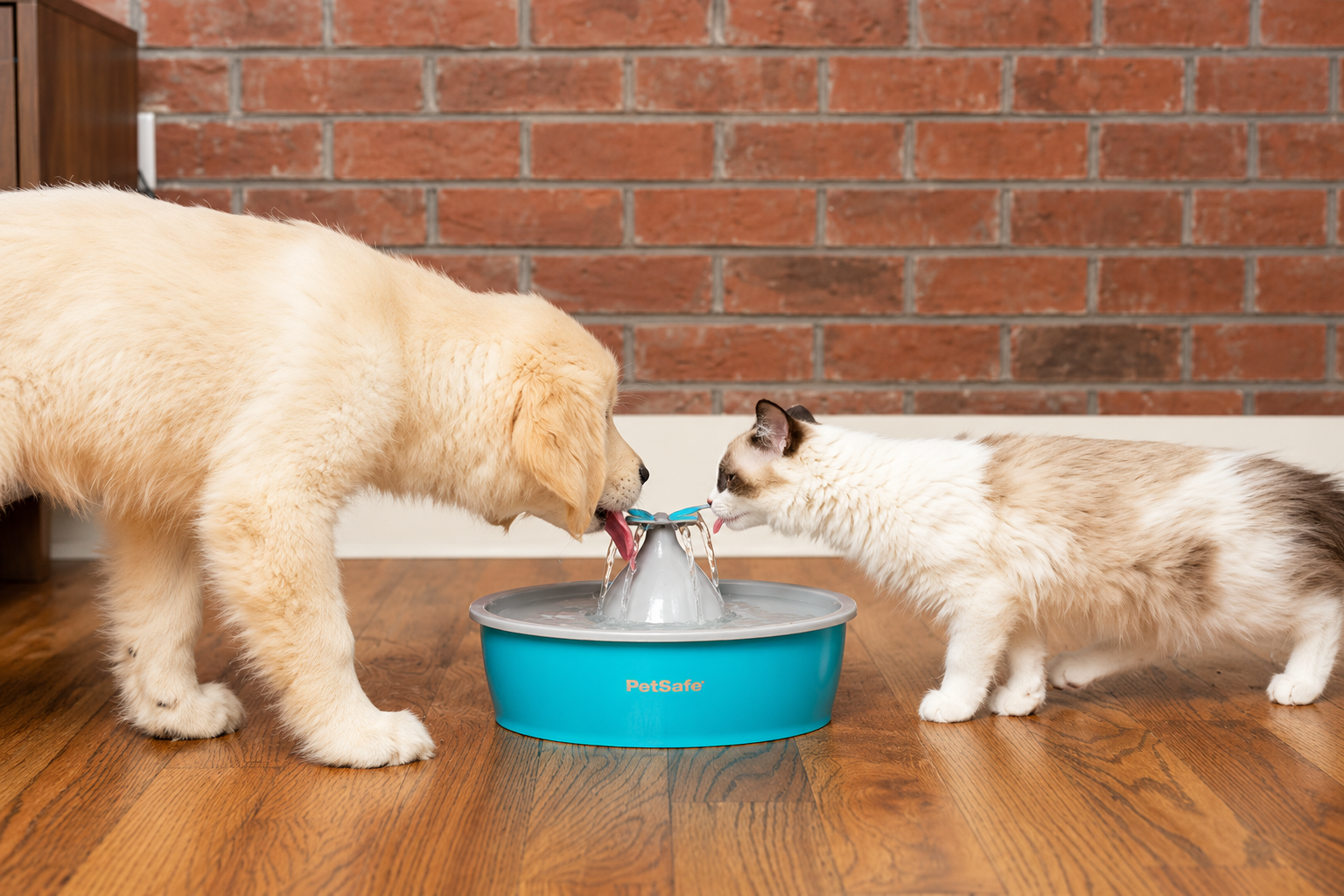
Six PetSafe Products, Explained by the Job They Do
1. ScoopFree Disposable Crystal Litter Tray Refills, Fresh Scent, 3-Pack
These prefilled replacement trays streamline maintenance for compatible ScoopFree self-cleaning litter boxes. Each combines crystal litter with a disposable tray, allowing owners to replace the used setup rather than wash and refill a permanent pan every time. Check compatibility with the specific ScoopFree model, watch how readily the cat uses the litter, and remember that disposable trays produce more packaging waste than reusable alternatives.
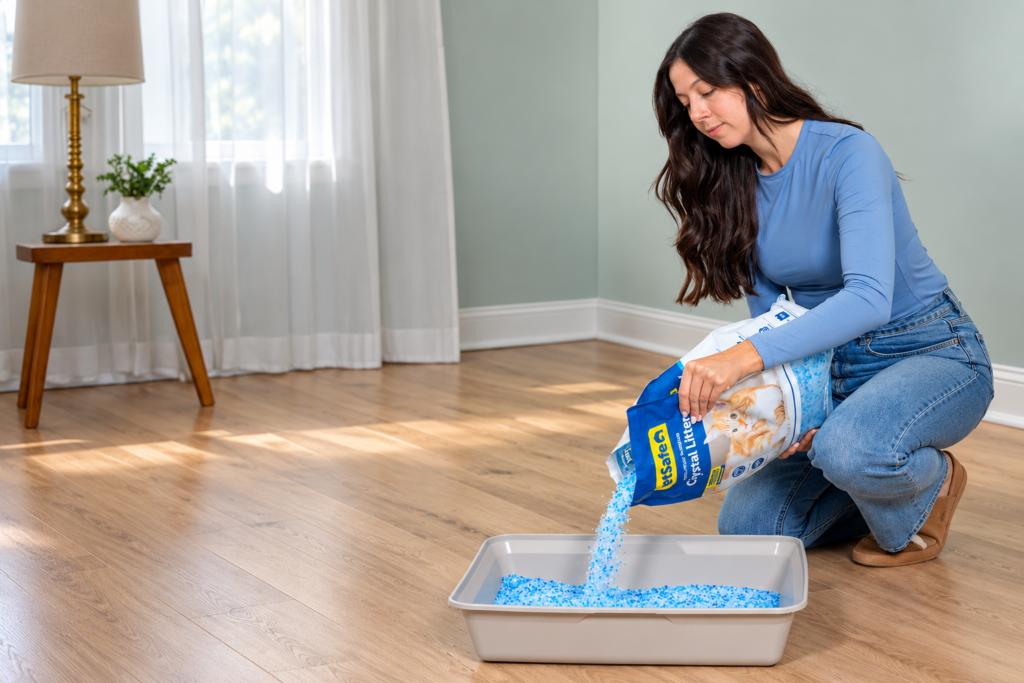
2. ScoopFree Premium Crystal Cat Litter, Fresh Scent, 4.3 lb, 2-Pack
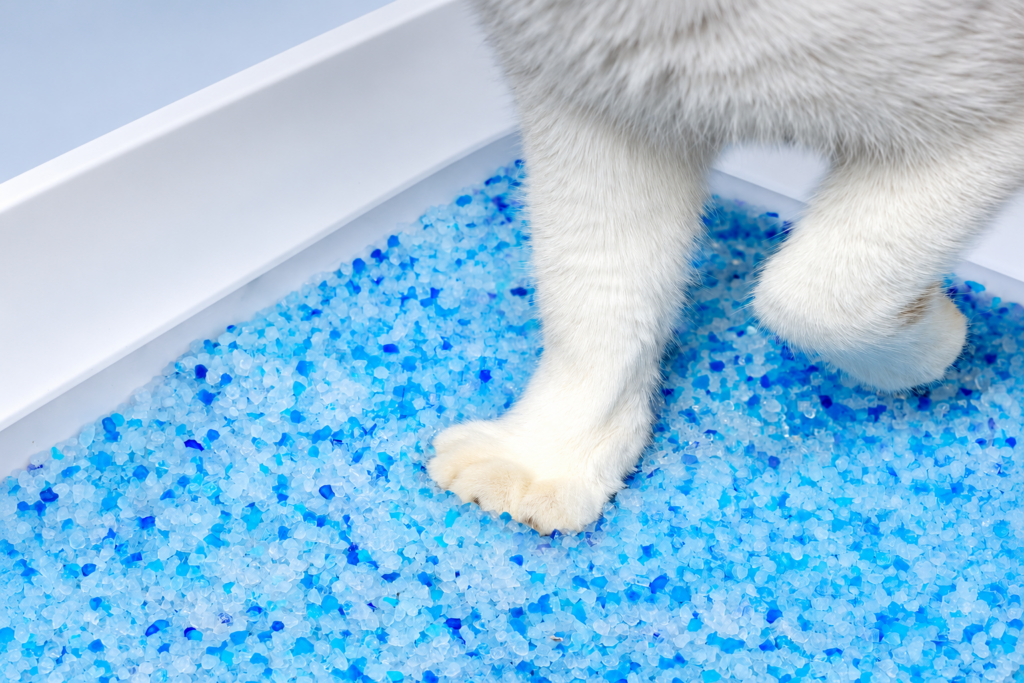
This two-pack supplies lightweight, non-clumping crystal litter for owners who prefer to refill a compatible tray themselves. PetSafe markets its crystals as low tracking and 99% dust-free, with a manufacturer-stated five-times advantage in odor control compared with clay. Actual results vary by cat, home, and maintenance.
3. ScoopFree Crystal Pro Legacy Self-Cleaning Litter Box, Uncovered
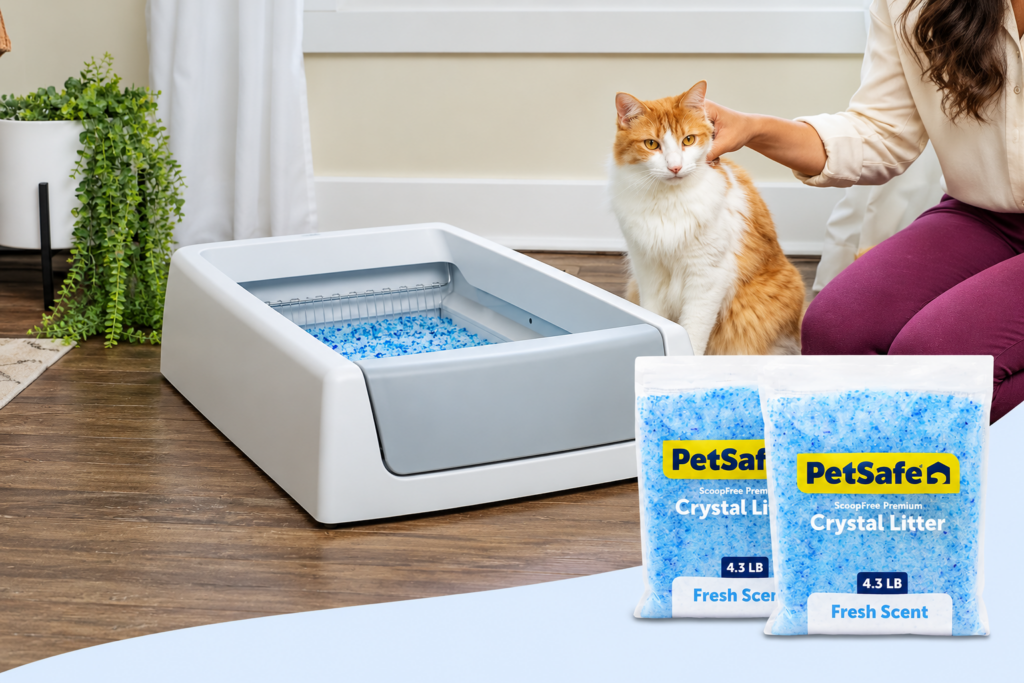
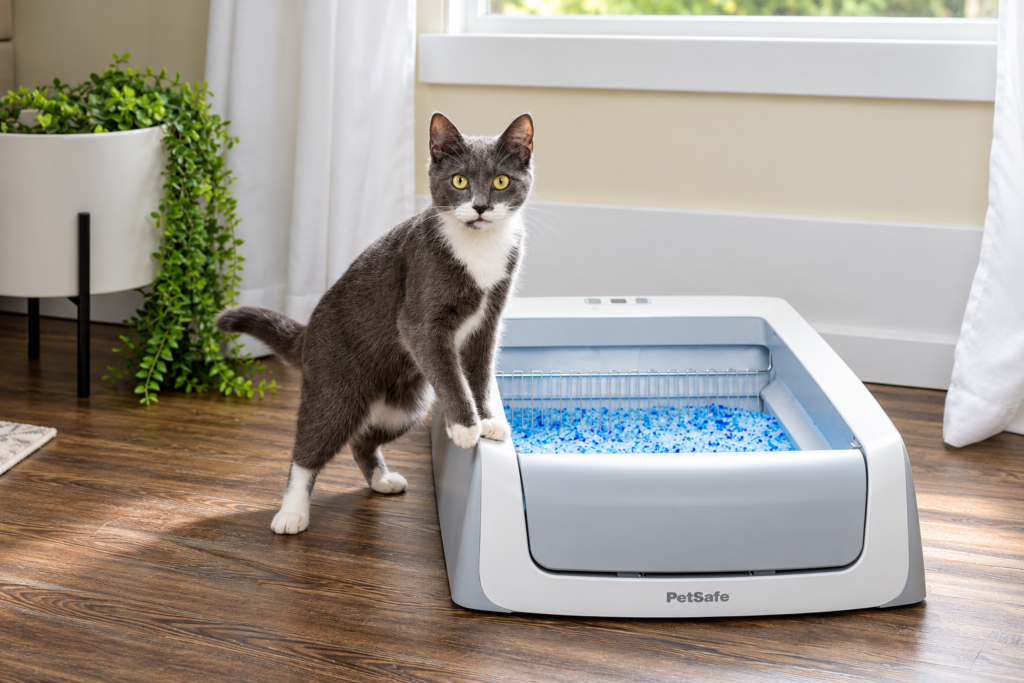
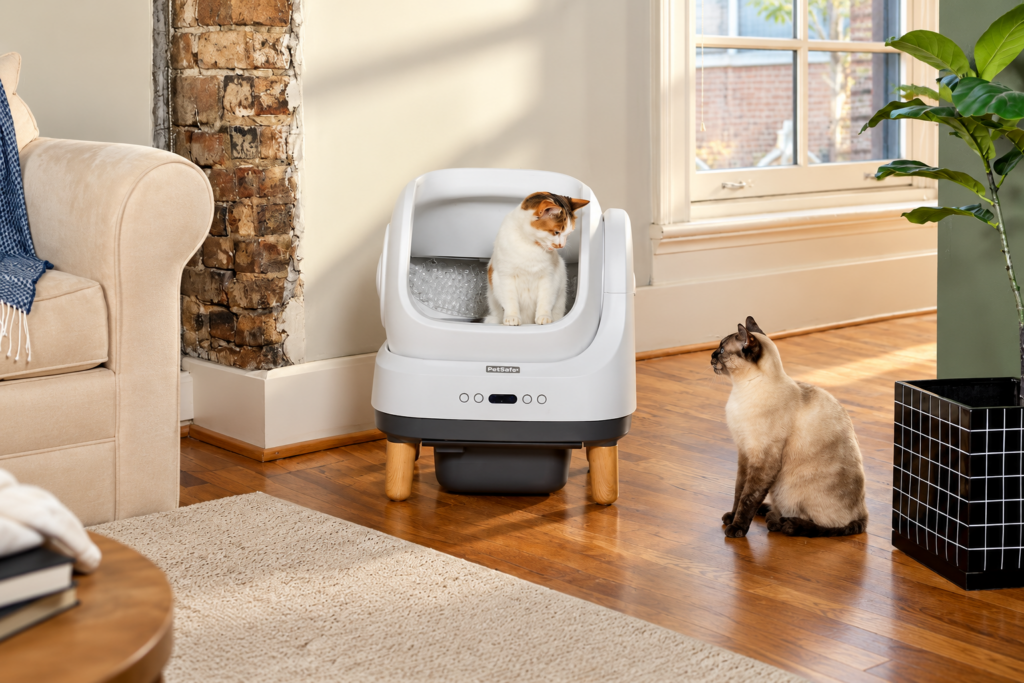
The open-top Crystal Pro Legacy automates waste raking after the cat leaves, using motion sensors and a usage counter. Its counter can help owners notice a change in litter-box visits, although it cannot diagnose a medical condition. PetSafe suggests up to 30 days without scooping in suitable conditions, though owners still need to monitor waste and replace trays. Its uncovered layout may appeal to cats that dislike enclosed boxes, provided they are comfortable with the mechanism.
4. SSSCAT Automatic Spray Pet Deterrent
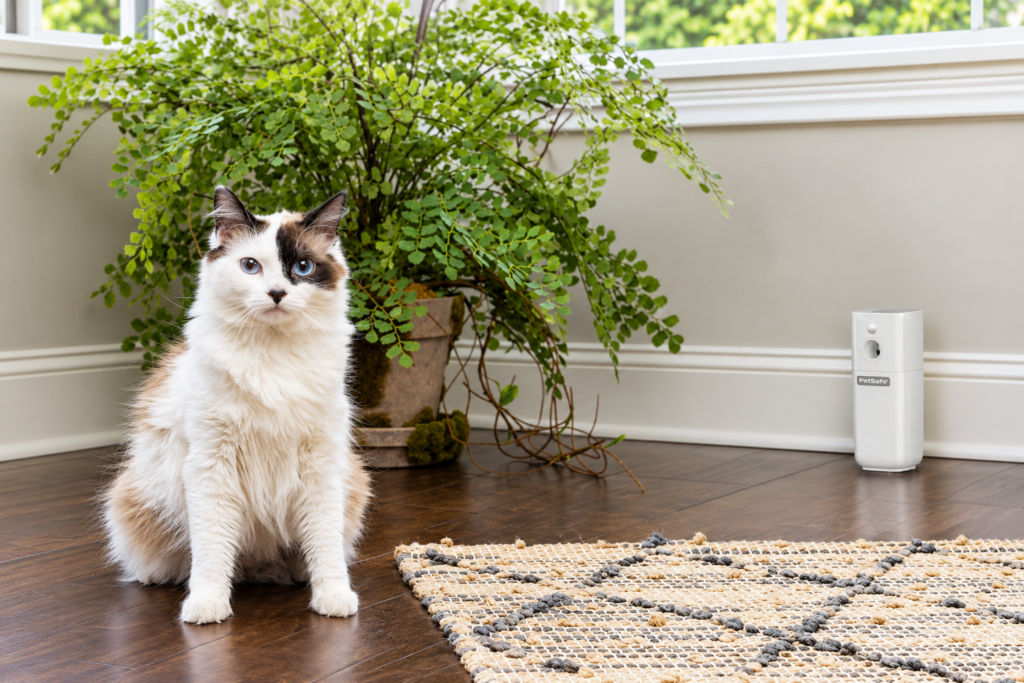
SSSCAT uses motion detection to release an unscented spray when a cat or dog approaches a selected indoor area, with detection up to approximately three feet. The unit includes a refill can and runs on four AAA batteries. Because spray bursts can startle sensitive animals, it should not replace humane training and management. Physical barriers, rewarding alternative behaviors, and careful placement should come first; never position a deterrent beside essential food, water, or litter resources.
5. ScoopFree Odor Control Crystal Cat Litter, Fresh Scent, 8 lb Bag
The eight-pound bag offers a larger quantity of PetSafe’s non-clumping, absorbent crystal litter without disposable trays. Its low-dust, low-tracking positioning makes it worth considering for owners seeking fewer scattered granules around the box. As with any scented substrate, observe whether the cat accepts it comfortably.
6. Wireless Pet Containment System Collar, Replacement or Add-A-Dog
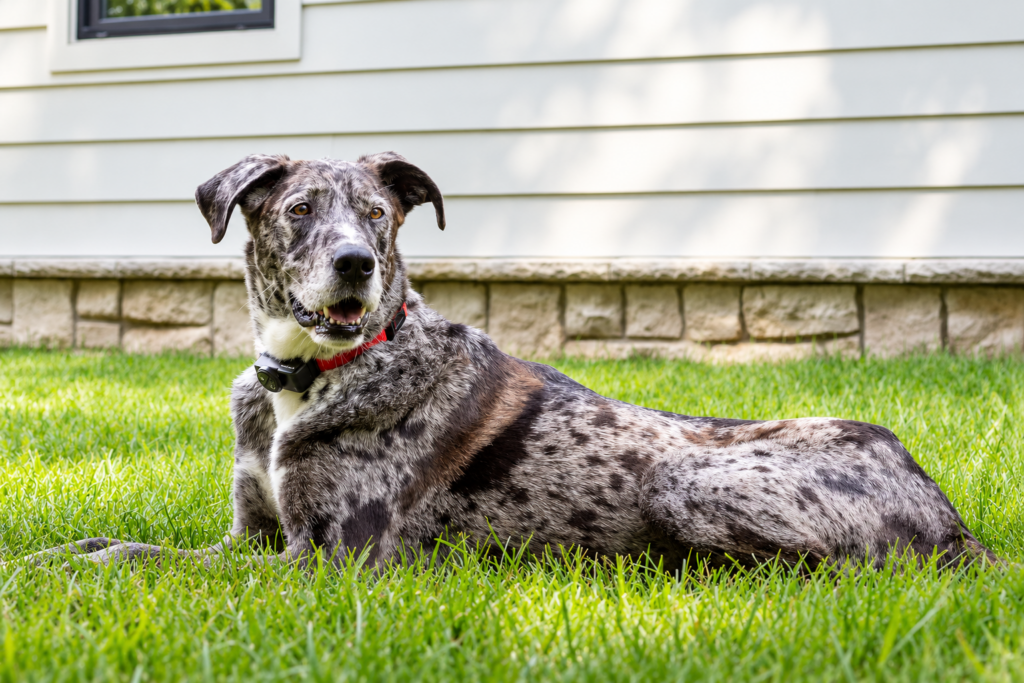
This waterproof receiver collar is an accessory for a compatible PetSafe wireless containment system, not a complete fence by itself. It is adjustable for necks measuring approximately 6 to 28 inches and is described for dogs weighing at least eight pounds. The collar offers an audible tone as well as static-correction settings. Because veterinary behavior specialists favor reward-based methods over aversive tools, owners should assess safer boundary options and seek professional guidance before considering static correction.
The Products Beyond the Six Familiar Names
PetSafe’s wider catalog becomes more interesting when organized by daily needs rather than by product aisle. Drinking fountains and automatic feeders can make hydration and mealtimes easier to manage, but they still require regular cleaning and attention to each animal’s intake. Pet doors, including smart and selective-entry designs, address movement between spaces while raising practical questions about weather protection, household security, and who or what can enter.
For active dogs, PetSafe also offers harnesses, leashes, ramps, and travel equipment. Good pet care is not simply about preventing messes; it also means creating opportunities for exploration, enrichment, and positive interaction.
What ties these products together is the idea of a home that changes with its inhabitants. Puppies mature, cats develop preferences, senior pets may need easier access, and household schedules evolve. A useful brand portfolio supports those transitions with different kinds of equipment.
An Original Home-Fit Scorecard, Not a Lab Test
To make purchasing decisions more transparent, consider this editorial scorecard. It is an original decision aid, not a consumer poll, laboratory study, or measured ranking of PetSafe products. Rate each category from one to five for your particular household, then compare the trade-offs before buying.
| Household test | Question to ask | A strong fit looks like |
|---|---|---|
| Pet acceptance | Will my pet willingly use it? | No avoidance or distress |
| Chore reduction | What work does it truly remove? | Fewer repetitive tasks, manageable upkeep |
| Long-term cost | What must I replenish? | Clear refills, supplies, and replacement needs |
| Welfare and safety | Can it support natural behavior? | Comfort, oversight, and humane choices |
The scorecard’s most revealing category is pet acceptance. A machine can save time on paper while creating new work if a cat refuses the litter or a dog becomes anxious around a boundary.
A Practical Three-Step Way to Introduce New Equipment
- Begin with the pet’s baseline. Note existing litter habits, feeding routines, activity levels, and signs of comfort. If a cat has sudden changes in elimination or a dog shows fear, address those concerns with a veterinarian instead of treating them as equipment problems.
- Change one variable at a time. Offer a new litter box alongside the familiar one, introduce a fountain gradually, or reward a dog for calm responses near a new setup. Follow the manufacturer’s instructions while allowing the animal to choose a comfortable pace.
- Review the whole routine. After an adjustment period, check cleaning time, ongoing costs, animal behavior, and any new difficulties. Keep the item only if it improves both practical care and the pet’s experience.
Community Investment and the Responsibility Behind Innovation
PetSafe’s public identity extends beyond retail. Through its Bark for Your Park initiative, launched in 2011, the brand has supported dog-park development in U.S. communities. Its published history describes contributions to more than 80 parks across 40 states, totaling over $1.65 million at the time reported.
Credibility also requires acknowledging when convenience and animal welfare can pull in different directions. The American Veterinary Society of Animal Behavior’s current humane-training position recommends reward-based methods and opposes aversive training techniques, including electronic correction collars. Similarly, automatic litter systems should never replace awareness of changes in urination or bowel habits. Responsible ownership uses devices as tools, not substitutes for observation or professional care.
The More Useful Definition of a Pet-Friendly Home
PetSafe is compelling not because every household needs automation, but because its product categories mirror the realities of life with animals: cleaning, nourishment, movement, play, supervision, and changing needs. The six highlighted products offer accessible examples, but the larger lesson is to match solutions to the animal, the living space, and the owner’s actual routine.
A thoughtful purchase should leave the household calmer, not simply more equipped. Choose the product that removes a genuine obstacle, introduce it gently, and keep evaluating how your pet responds. That is the most convincing way to understand PetSafe’s place in modern pet care: as one possible partner in building a home where practical convenience and animal well-being can coexist.
Research context: PetSafe’s corporate history and product descriptions; the American Pet Products Association’s 2026 State of the Industry report; feline litter-box guidance from the Feline Veterinary Medical Association; and the American Veterinary Society of Animal Behavior’s humane dog-training position. Manufacturer performance statements are identified as claims. No independent product testing or original consumer survey is asserted.