Training a dog is rarely about one command, one walk, or one quick correction. It is an ongoing process built around timing, consistency, boundaries, trust, and the ability to communicate clearly in changing environments.
That is the space SLOPEHILL has chosen to focus on.
Rather than approaching dog training equipment as a one-size-fits-all category, SLOPEHILL offers remote training collar systems designed around different dogs, different household routines, and different outdoor situations. Across the brand’s lineup, recurring themes include long-range operation, multiple training modes, waterproof receiver collars, adjustable settings, safety-oriented controls, visibility features, and multi-dog compatibility.
The result is a collection aimed at owners who want more flexibility when working on recall, boundaries, unwanted behaviors, or off-leash communication while still adapting the training approach to an individual dog.
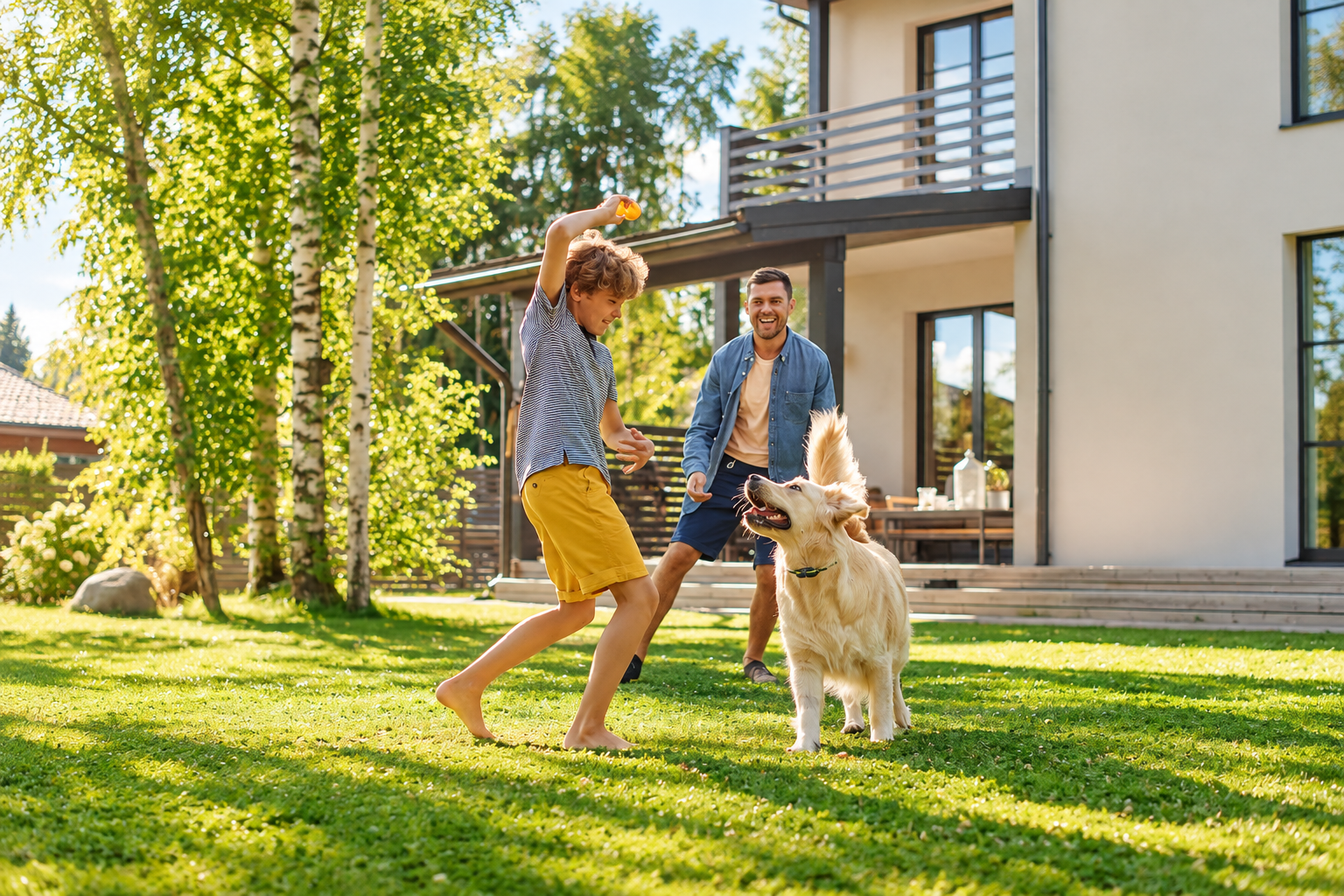
SLOPEHILL’s Core Idea: Training Should Adapt to the Dog
Every dog responds differently.
Some are highly sensitive to sound. Others become easily distracted outdoors. A young dog may need help learning boundaries around the yard, while an energetic adult dog might require reliable recall practice over a larger area.
SLOPEHILL’s product family reflects those differences by offering several feedback options rather than relying on a single signal.
Depending on the model, the collars shown across the range incorporate combinations of beep, vibration, light, safety lock functions, and adjustable static stimulation. The remote controls are designed to let owners select settings according to the training situation instead of applying the same response every time.
That flexibility matters.
Responsible training is not about using the strongest available setting. It is about finding the mildest effective cue, pairing it with clearly taught commands, and rewarding the correct behavior. When used thoughtfully alongside positive reinforcement, remote training tools can function as additional communication aids rather than substitutes for patient training.
This adaptable philosophy is one of the strongest themes running through SLOPEHILL’s catalog.
1. Built for Greater Freedom Outdoors
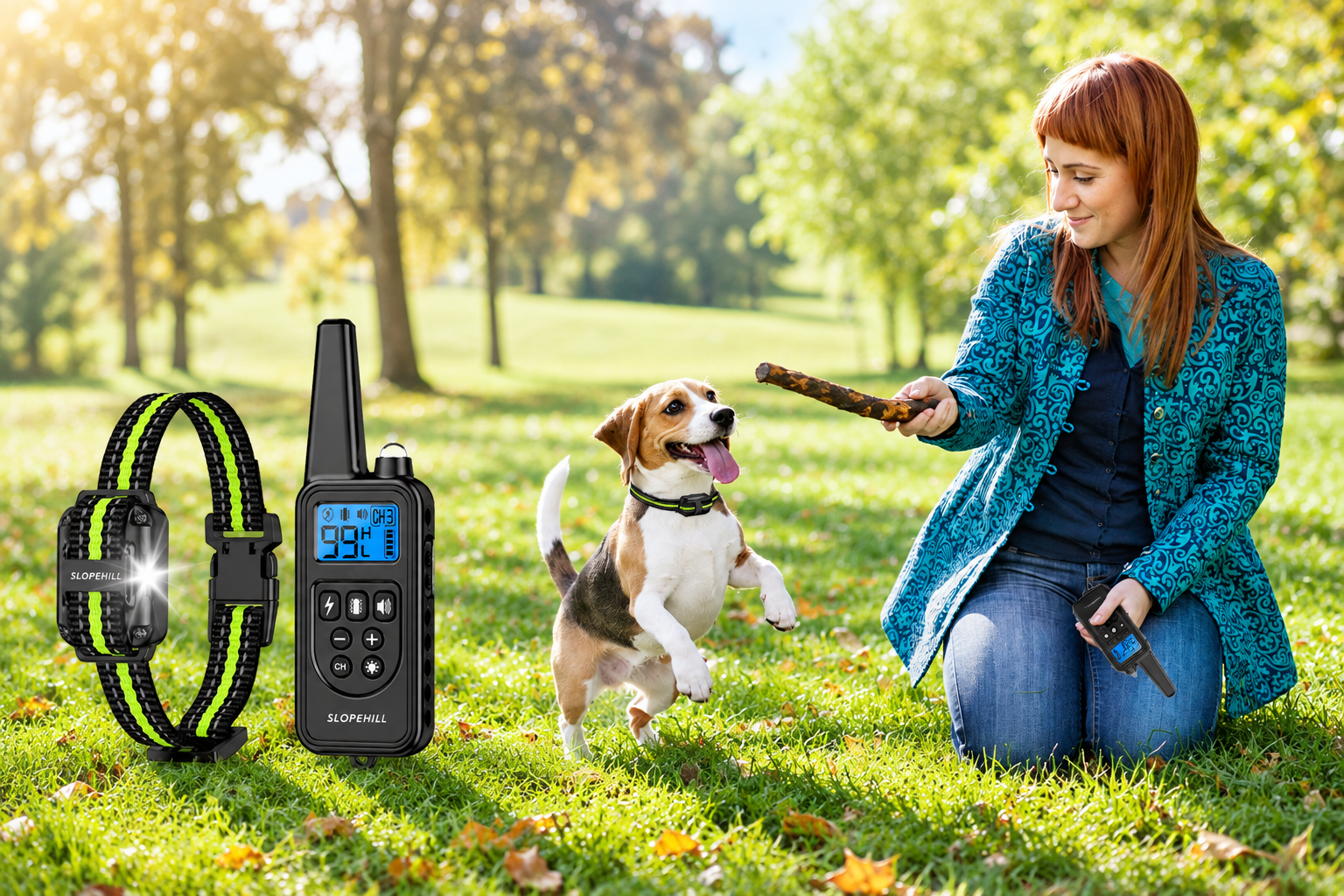
The first featured SLOPEHILL system is designed for owners who want to maintain communication with their dogs across larger outdoor spaces.
Its product presentation emphasizes a remote operating range of up to approximately 4,200 feet, making the system particularly relevant for training sessions in larger yards, parks, fields, trails, and other open environments.
Range becomes especially important when practicing recall.
A dog learning to return reliably may begin training only a few feet away, but eventually the owner needs to reinforce that same command at greater distances and around more distractions. A long-range remote provides additional flexibility as training progresses.
This model also incorporates multiple training modes, including sound and vibration-based signals as well as adjustable correction options. That makes it possible to build a graduated training routine.
An owner might begin with a verbal command, follow with a beep or vibration cue, and reserve stronger feedback only for situations where it has been properly introduced and genuinely needed.
The illuminated remote display also improves readability, while the receiver collar is designed for outdoor use. Together, these details make the system feel suited to owners whose training routines extend well beyond the living room.
2. Two-Dog Training Without Doubling the Complexity
Training one dog can be challenging. Training two at the same time introduces an entirely different set of demands.
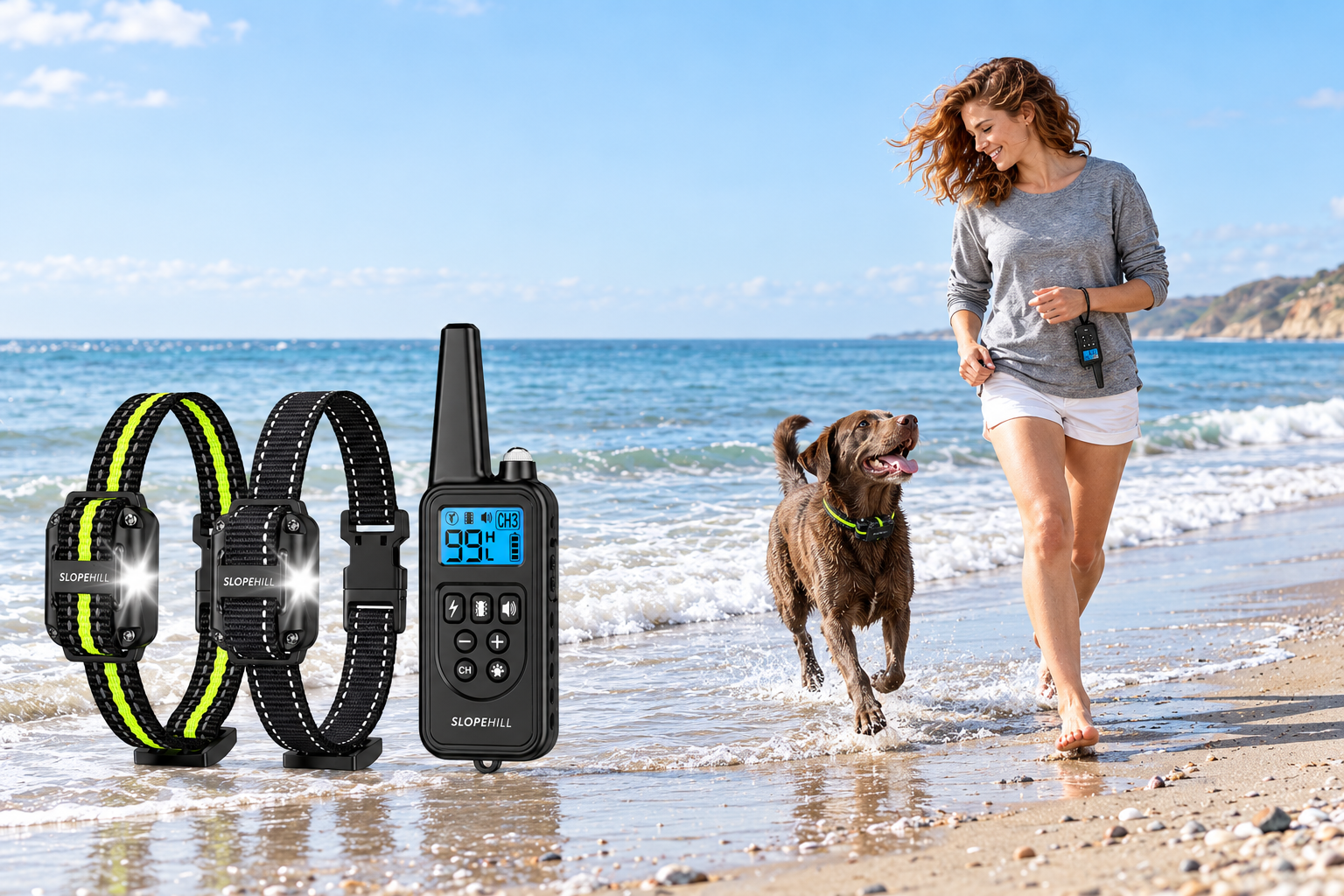
SLOPEHILL’s two-receiver system is designed for multi-dog households that want to manage both collars from a single remote.
This configuration can be useful for families with two active dogs, owners working on synchronized recall, or households where both pets require consistent boundary training.
Instead of carrying separate remotes, the user can switch between the receiver collars through one controller.
That may sound like a small convenience, but it can make a major difference during real training sessions.
Imagine walking two dogs in an open field. One responds immediately to recall while the other begins following a distraction. The ability to select the appropriate collar without juggling multiple devices helps keep the training interaction more organized.
The system also maintains the wider SLOPEHILL emphasis on several feedback modes, adjustable intensity, and extended-range communication.
For owners with multiple dogs, that makes the product less about additional hardware and more about simplifying the training workflow.
3. A Softer-Looking Design With Serious Training Features
Dog training products do not always need to look purely utilitarian.
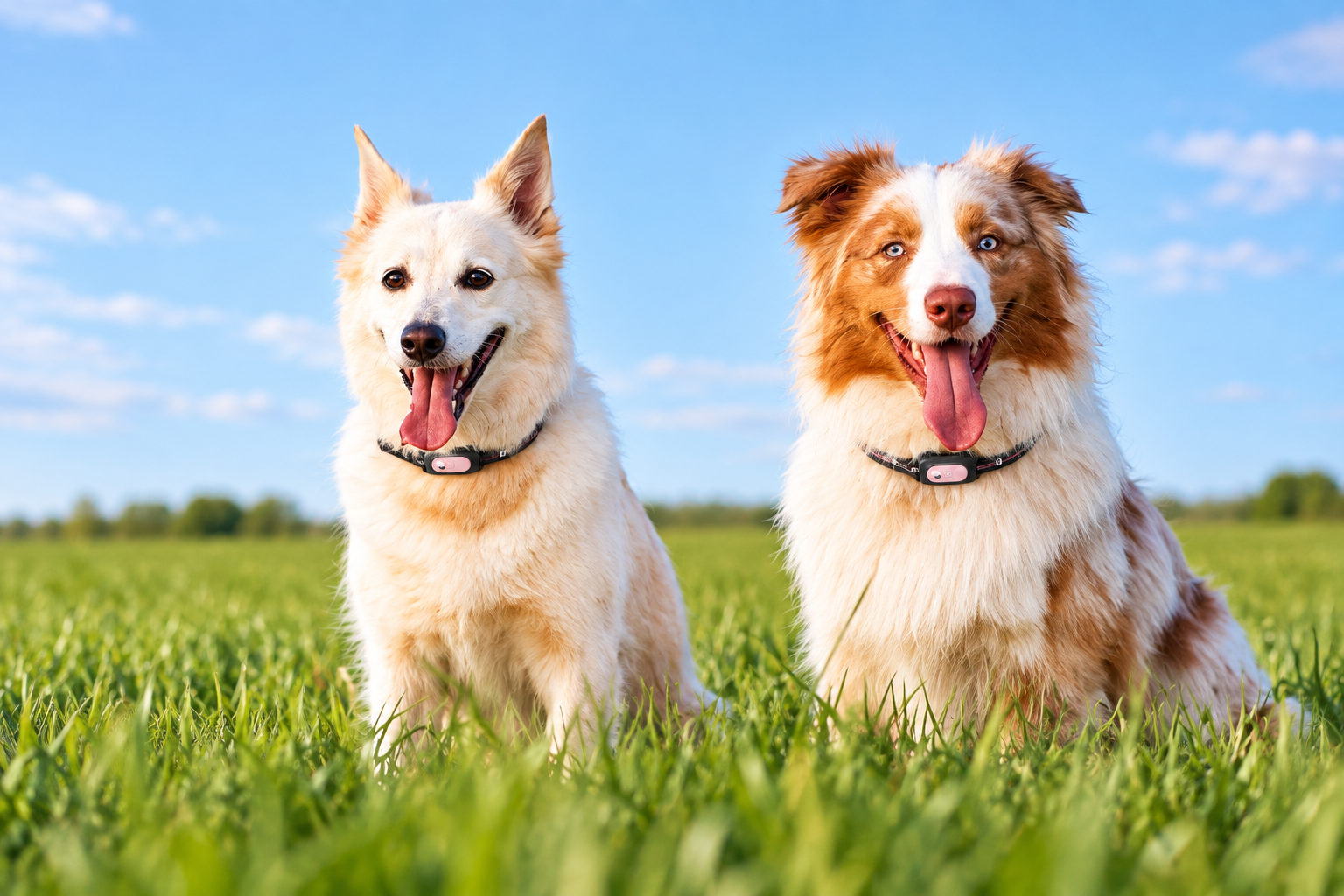
The pink-accented SLOPEHILL training collar featured in the collection adds a more playful visual identity while maintaining the functional elements expected from a remote trainer.
Its product information highlights a long communication range, multiple feedback modes, safety-lock functionality, and nighttime visibility features.
The safety lock is particularly useful in day-to-day handling because it can help reduce accidental remote activation when the controller is carried in a pocket, bag, or hand during movement.
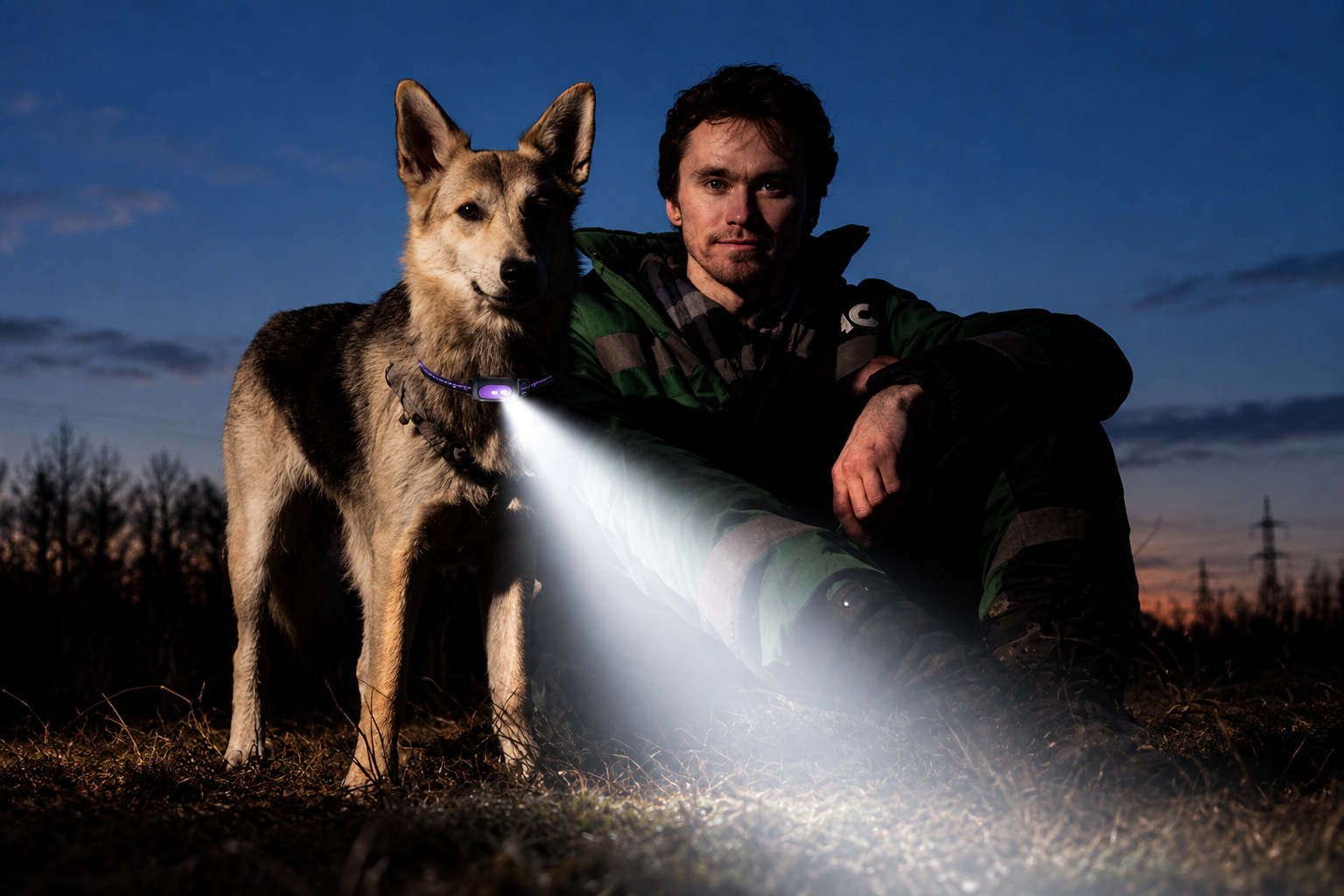
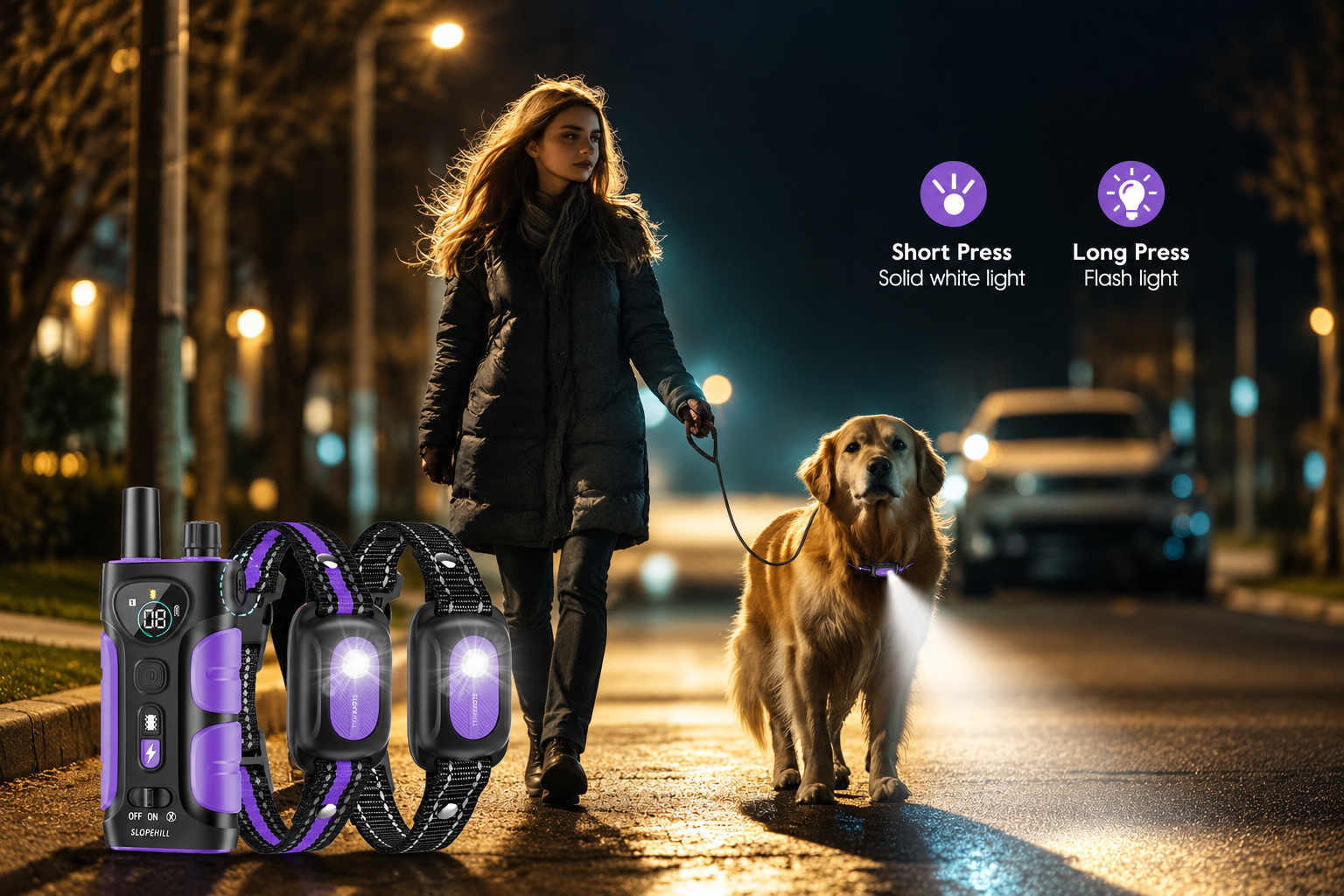
Meanwhile, built-in light functionality gives owners another useful tool after sunset.
Evening walks, large backyards, campsites, and poorly illuminated outdoor areas can make a dog difficult to spot at distance. A receiver with a visible light feature improves awareness without requiring an entirely separate accessory.
The model is also positioned across different dog sizes, reinforcing the importance of proper collar fit and individualized settings.
Owners should always make sure the contact points are positioned correctly, the collar is snug without being overly tight, and the dog is comfortable before beginning any training session.
That attention to fit is just as important as the electronics themselves.
4. Everyday Versatility in a Purple Edition
The purple SLOPEHILL model brings similar functionality into another distinctive design.
Its combination of a handheld remote, adjustable receiver collar, several training signals, lighting support, and long-distance operation makes it useful across a wide range of everyday situations.
Consider the difference between indoor and outdoor training.
Inside the home, an owner may be working on behaviors such as staying away from a doorway or responding to a place command. Outdoors, the challenge may shift to recall around other dogs, wildlife, people, or unfamiliar sounds.
A flexible remote system allows the owner to adjust the type of cue to match the environment.
That does not mean every behavior should be handled remotely. In fact, the best results generally come when a dog already understands the requested behavior through reward-based teaching.
Remote cues are most effective when they reinforce something the dog has learned rather than confusing the animal with unexplained signals.
SLOPEHILL’s multiple-mode design supports this more structured approach.
5. A Multi-Collar Setup for Bigger Dog Households
One of the most interesting products in the current lineup expands the concept beyond two dogs.
The multi-receiver configuration shown with this model is intended for owners managing several dogs through one remote platform.
That could be particularly practical for larger households, working-dog environments, training groups, or owners who regularly exercise multiple dogs together.
The benefit is centralized control.
Instead of maintaining several independent systems, one remote can help organize communication across compatible receiver collars.
This type of setup is not necessary for every owner, but for someone with multiple dogs, it addresses a very real logistical problem.
The model also continues familiar SLOPEHILL features such as adjustable training feedback, visibility functions, and outdoor-ready receiver construction.
In that sense, it demonstrates how the brand is scaling the same fundamental training concept to suit more complex households.
Why Range Matters—Even When You Never Use All of It
Long-range specifications appear repeatedly throughout the SLOPEHILL collection.
At first glance, thousands of feet may sound unnecessary for an ordinary pet owner. But maximum range is not only about sending a signal across an enormous field.
Environmental conditions can influence remote performance. Buildings, terrain, vegetation, and physical obstacles can reduce effective distance. A system engineered for longer open-area range can therefore provide useful operating headroom during more typical training situations.
It also gives owners room to progress.
Recall training frequently begins on a short leash or long line before moving gradually into more open environments. Having a remote capable of supporting that progression means the owner does not necessarily need a different system later.
Waterproofing for Dogs Who Refuse to Stay Dry
Dogs are not careful with electronics.
They run through wet grass, jump into puddles, play near sprinklers, explore muddy trails, and occasionally decide that a pond looks irresistible.
That is why SLOPEHILL repeatedly emphasizes water resistance and waterproof receiver designs across its training lineup.
For active dogs, this is more than a technical specification.
It allows training routines to continue across changing conditions without owners constantly worrying about ordinary moisture exposure. Whether during rainy walks, beach trips, countryside outings, or backyard play, rugged receiver construction helps the collar fit naturally into an outdoor lifestyle.
A Better Approach to Remote Training
The most important part of any training collar is not the remote.
It is the training plan.
Dogs learn best when expectations are clear and correct behavior is reinforced consistently. Before introducing any electronic training cue, owners should first teach commands using praise, food, toys, play, leash guidance, and repetition.
If remote stimulation is used, it should begin at the lowest effective level and never be treated as punishment for behavior the dog has not yet been taught to understand.
Sessions should also remain short and focused. The collar should be fitted carefully, checked regularly, and removed when appropriate to avoid unnecessary pressure against the skin.
Used this way, a remote training system becomes one part of a broader communication strategy rather than the entire strategy.
What Makes SLOPEHILL Stand Out
SLOPEHILL’s strength is variety built around a consistent purpose.
Single-dog systems provide straightforward control. Dual-receiver packages address two-dog households. Multi-collar configurations scale that concept further. Long operating ranges support outdoor practice, waterproof receivers suit active pets, and safety-lock and light functions make everyday handling more practical.
The brand also offers different color combinations and collar configurations, giving shoppers more freedom to choose a system that suits both their pets and their routine.
Rather than emphasizing technology for its own sake, the best way to understand SLOPEHILL is as a brand focused on giving dog owners more ways to communicate across distance.

Final Thoughts: Better Tools Work Best With Better Training
Good dog training is ultimately built on a relationship.
Technology can extend communication, but it cannot replace patience. A remote can send a signal across a field, but owners still need to teach the dog what that signal means.
SLOPEHILL’s training collar collection provides the flexibility to support that process through multiple training modes, adjustable settings, extended range, waterproof construction, safety features, and solutions for one or multiple dogs.
For owners prepared to combine those tools with positive reinforcement, clear commands, consistent boundaries, and responsible use, SLOPEHILL offers a versatile platform for training at home and exploring farther outdoors.
Whether the goal is more dependable recall, improved boundary awareness, better communication during walks, or a more organized approach to managing several dogs, the brand provides options designed for real-world training routines.
Because the ultimate goal is not simply greater control.
It is greater understanding between owner and dog.
Explore more SLOPEHILL dog training solutions here.